
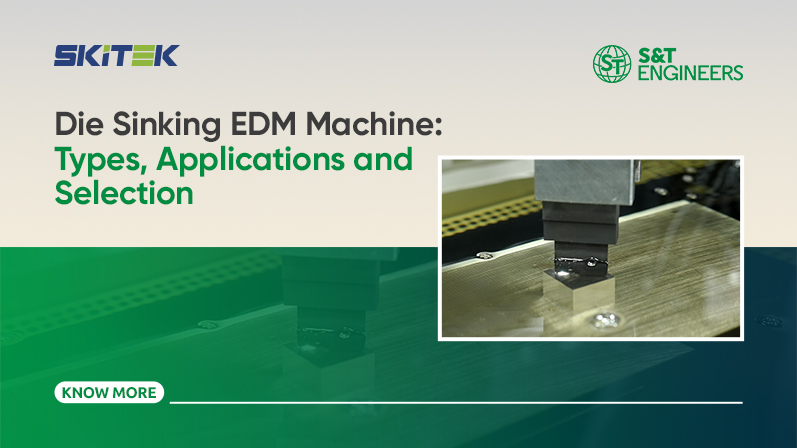
A die sinking EDM machine produces complex cavities, recesses and intricate features in electrically conductive workpieces. It is widely used in die and mould manufacturing for accurate cavity production. Also called a sinker EDM or spark erosion machine, it removes material through controlled electrical discharges between a shaped electrode and the workpiece.
How Does a Die Sinking EDM Machine Work?
Die sinking EDM removes material through electrical discharges across a small gap between the electrode and workpiece. The heat generated melts and vaporised small amounts of material, gradually forming the required cavity.
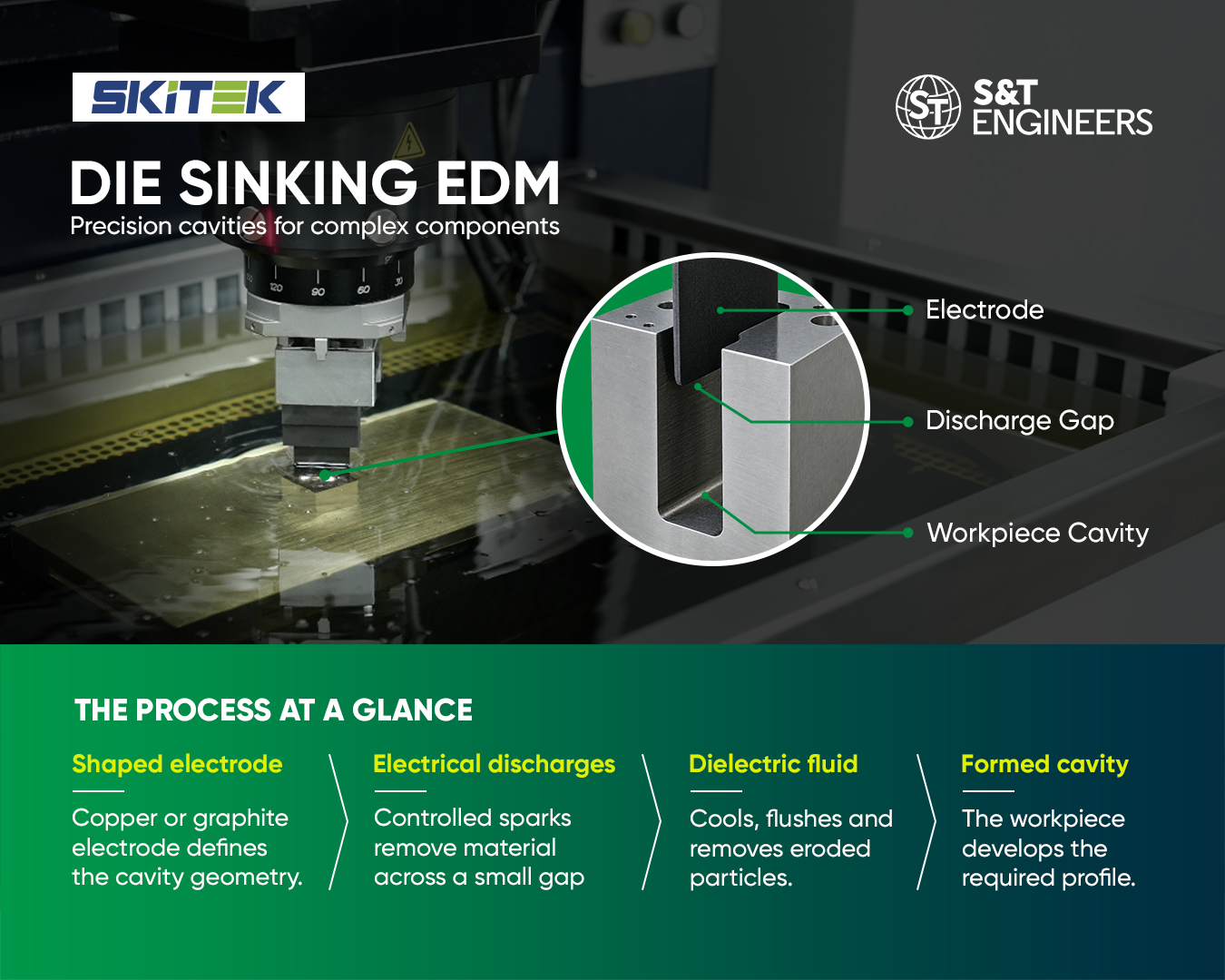
The process has four main stages:
1. Electrode preparation: A copper or graphite electrode is made to suit the cavity geometry. Material selection depends on the application and machining requirements.
2. Workpiece setup: The conductive workpiece and electrode are positioned and aligned.
3. Spark erosion: Controlled discharges remove material as the electrode advances. Discharge parameters and the machining gap influence removal and cavity quality.
4. Dielectric circulation and finishing: Dielectric fluid supports discharging, cooling and removal of eroded particles. Fluid type and flushing arrangements vary by machine and application. Finishing passes may be needed to achieve the specified surface condition.
Electrode wear directly influences cavity accuracy. As the electrode erodes, its geometry can change, affecting the cavity's dimensions and shape. Electrode design, wear management, machining parameters and finishing strategies are important for precision features.
Types of Die Sinking EDM Machines
Die sinking EDM machines are commonly available in ZNC and CNC configurations, with capabilities depending on the model.
1. ZNC Die Sinking EDM Machine
ZNC refers to Z-axis Numerical Control. This configuration provides numerical control of electrode movement along the Z-axis. Suitability depends on available control functions, machine travel and machining requirements.
Applications include die and mould cavities, recesses and specialised toolroom work when the geometry suits the machine. Check the control functions, workpiece capacity and application suitability before selecting a model.
2. CNC Die Sinking EDM Machine
CNC stands for Computer Numerical Control. These machines use programmed control of machining movements and operations. Depending on the model, they can support complex machining sequences and repeatable production requirements.
Applications include injection mould cavities, precision die components and intricate recesses requiring programmed operations. Verify the available axes, programming functions, working capacity and control capabilities against the component requirements.
Key Applications of Die Sinking EDM
Key tooling applications include:
- Injection moulds: Producing cavity details, narrow recesses and deep features. Electrode access and flushing are important in deep or narrow cavities.
- Press and stamping dies: Machining specified profiles and features in conductive die materials, including hardened tool steels.
- Die-casting dies: Forming complex cavity details and localised features according to component design.
- Precision tooling: Producing specialised cavities and recesses suited to electrode-based machining.
Results depend on electrode accuracy, discharge energy, process parameters, flushing and finishing strategy. The thermal process can create a recast layer and other surface changes. Where surface integrity is critical, define finishing and inspection requirements before machining.
How to Select the Right CNC Die Sinker EDM Machine
Consider these factors before selecting a machine:
- Machining capacity: Confirm workpiece dimensions, weight limits, electrode size and machine travel.
- Cavity geometry: Assess depth, feature size, electrode access and flushing requirements.
- Control system: Compare actual ZNC or CNC functions, available axes and programming needs.
- Accuracy and finish: Define dimensional tolerances, surface requirements and any post-machining treatment.
- Operating requirements: Consider electrode wear, dielectric filtration, flushing and finishing operations.
Choose the Right EDM Configuration
Match component geometry, dimensions, accuracy and production needs to the machine's documented capabilities.
S&T Engineers offers CNC die sinker machine and ZNC die sinker machine options for different manufacturing requirements. Review the relevant model specifications to identify a suitable configuration for your application.
Discuss your cavity geometry, workpiece dimensions and production needs with the S&T team to explore suitable die sinking EDM machine options.