
Turning remains one of the most widely used machining processes across general engineering workshops, tool rooms, maintenance departments and job shops. From producing shafts and bushes to machining threads, tapers and internal diameters, workshops often need a machine that can handle different turning requirements without adding unnecessary complexity to the process.
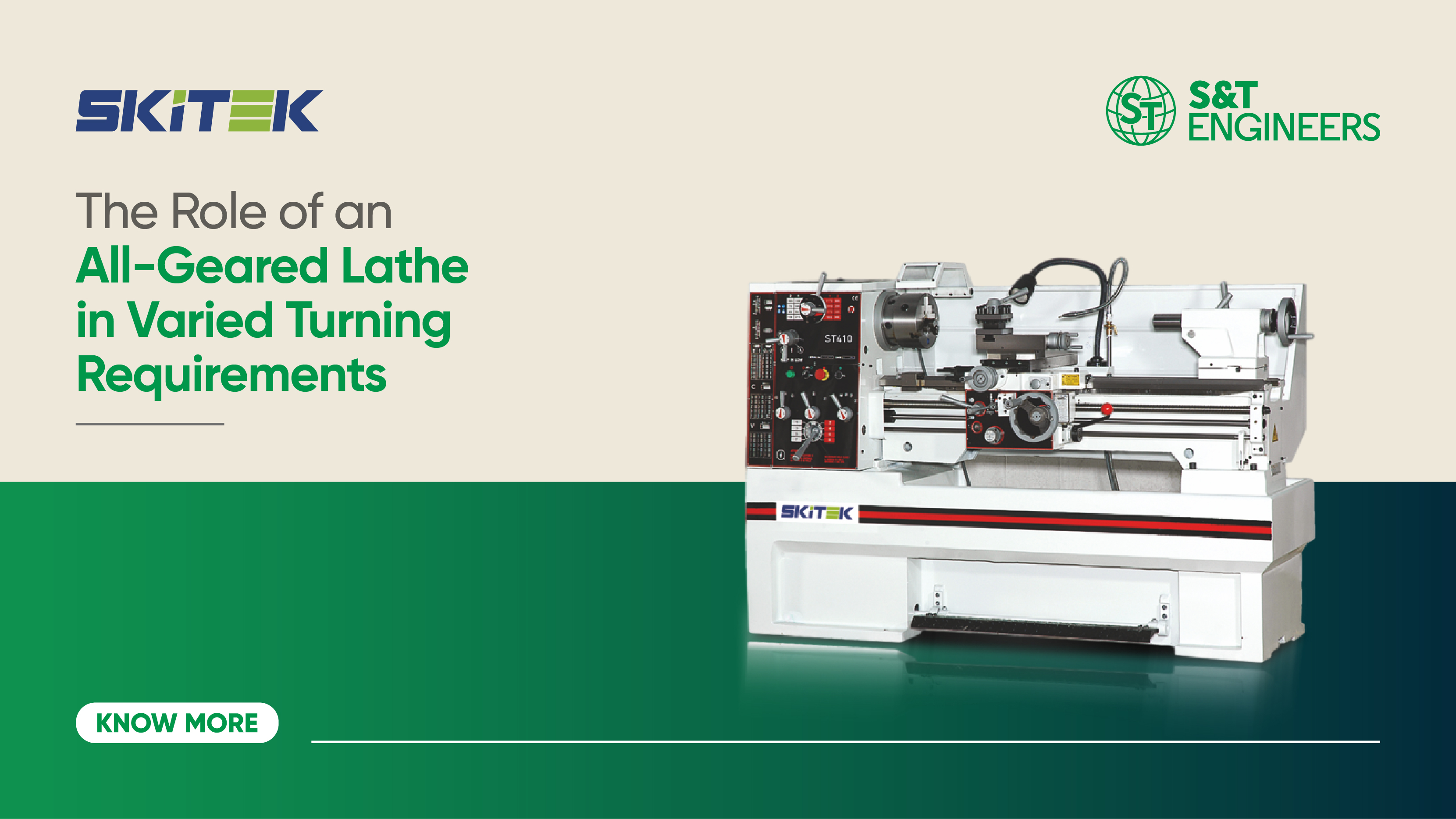
For such applications, an All-Geared Lathe Machine continues to be a practical conventional machining solution.
What Makes an All-Geared Lathe Machine Different?
The key difference lies in its geared headstock arrangement.
In an all-geared lathe, spindle speeds can be selected through the machine's gear system. This allows the operator to choose a suitable speed range based on factors such as workpiece diameter, material and the type of turning operation being carried out.
This becomes useful because turning conditions are not the same for every job. A larger-diameter component, for example, may require a different spindle speed from a smaller workpiece. Similarly, rough turning, finishing and threading may each require different machining conditions.
The geared arrangement therefore gives the operator greater control in matching the machine setting to the actual job.
One Machine, Multiple Turning Operations
A turning component often passes through several operations before it is complete.
The job may begin with facing to prepare the end surface, followed by straight or step turning to achieve the required outside diameters. Depending on the component, the same setup may also involve taper turning, threading, boring, drilling, grooving, reaming or parting-off using the appropriate tooling and work holding arrangement.
This makes an All-Geared Lathe suitable for machining a variety of rotational components such as shafts, bushes, sleeves, spacers, pins, collars, rollers, threaded parts and similar general engineering components, depending on the dimensions and machining requirements of the job.
For workshops handling varied components rather than continuous production of one identical part, this versatility can be particularly useful.
Choosing a Lathe Based on the Work
Selecting the right lathe should begin with the type of work the machine is expected to handle. The nature of the components, production volume and frequency of job changes all influence which machining setup is most suitable.
For workshops that regularly handle one-off components, repair jobs, small batches and frequently changing turning requirements, an All-Geared Lathe machine can offer the flexibility needed for day-to-day machining. It allows operators to handle different rotational components and perform a range of turning operations without depending on programmed automation.
Workpiece size, the type of turning operations required and the level of operator control needed should also be considered while selecting the machine. A lathe that matches the actual shop-floor requirement can be utilized more effectively than one chosen only based on machine category or automation level.
A Versatile Conventional Turning Solution
Explore the SKITEK All Geared Lathe Machine from S&T Engineers for your everyday turning requirements.
Contact S&T Engineers to know more.