
Not every machining requirement calls for a full-size milling machine. Many workshops regularly handle smaller components, repair work, prototype jobs, maintenance tasks and short production runs where the machining requirement is more limited.
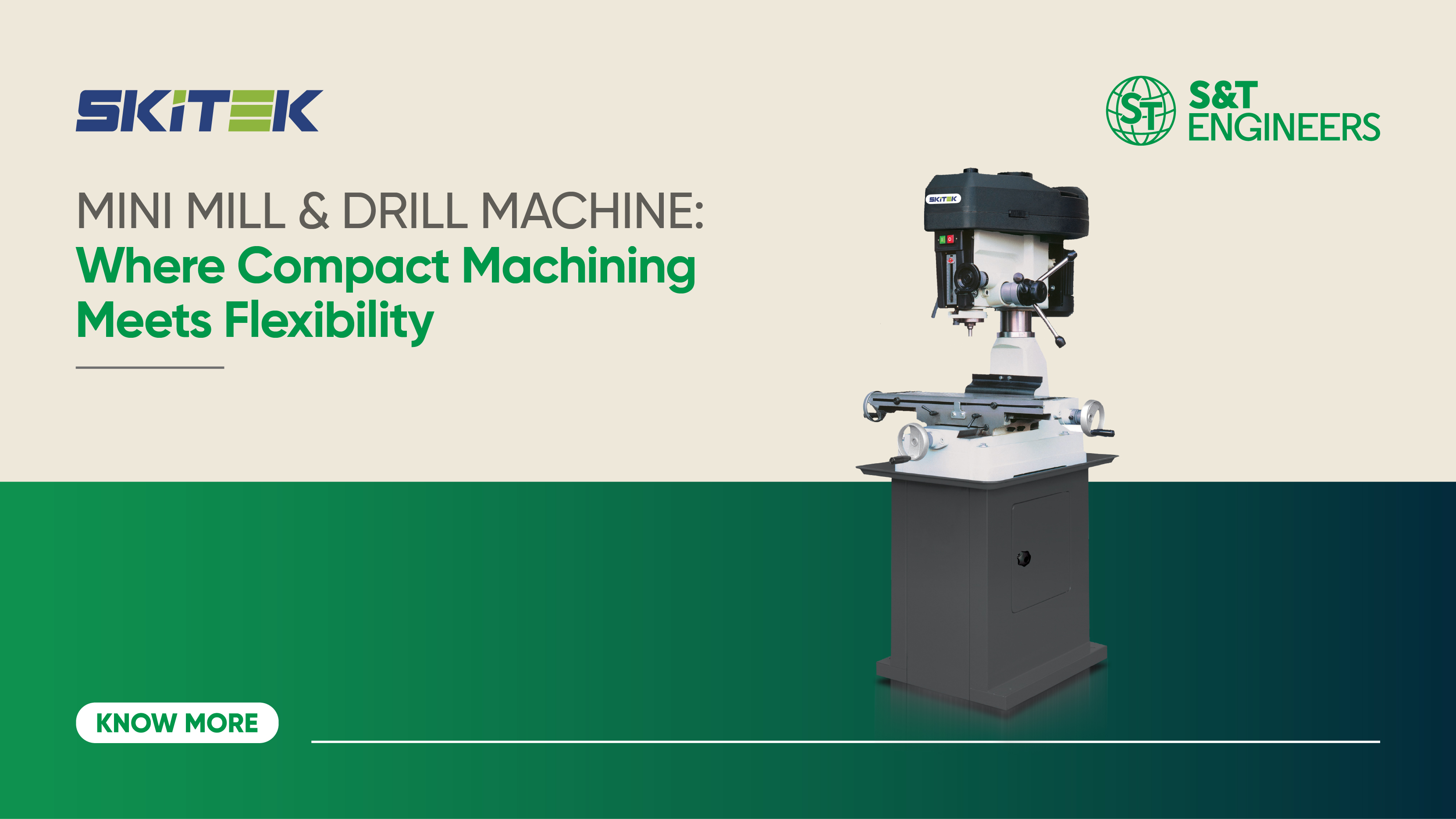
A Mini Mill & Drill Machine is designed for this kind of work. Also commonly referred to as Milling Cum Drilling Machine or Bench Type Milling Cum Drilling Machine, it combines basic milling and drilling capability in a compact conventional setup.
For workshops looking for a machine that can handle varied day-to-day work without moving directly to a larger milling setup, this category can be a practical option.
What Exactly Is a Mini Mill & Drill Machine?
A Mini Mill & Drill Machine is a compact conventional machine developed to carry out both milling and drilling operations on suitable components.
Its role is straightforward: provide useful machining capability for jobs that do not require the scale of a full-size milling machine.
Because both milling and drilling can be carried out on the same machine, it can support workshops where the work changes frequently. This makes it suitable for environments where flexibility is more important than dedicating a separate machine to every individual operation.
What Kind of Jobs Can It Handle?
A Mini Mill & Drill can support a range of general machining requirements on smaller components.
Typical work may include drilling, basic milling, slotting, surface machining, small repair jobs, component modifications, prototype work and short production runs.
For maintenance teams, it can help with repair and modification work that needs to be completed within the workshop. For tool rooms and prototype sections, it can support jobs where component designs or machining requirements may change regularly.
The machine is therefore especially useful where the workload is varied rather than focused on continuous production of one type of component.
Why Customers Consider a Mini Mill & Drill
Different customers may consider this machine for different reasons.
For a small engineering workshop, the priority may be to perform common milling and drilling work without allocating excessive space to a larger machine.
A maintenance department may need a machine for occasional repair, modification and support jobs without relying on production equipment.
A tool room or prototype section may value the ability to work on different small components as job requirements change.
For training institutions, a compact conventional machine can also provide practical exposure to basic milling and drilling operations.
The common requirement across these users is not simply machine size. It is having enough machining capability to suit the actual work being handled.
What to Consider Before Choosing One
Selecting a Mini Mill & Drill should begin with the kind of work the machine will perform regularly.
The size of the components, the type of milling and drilling work required, production quantity, frequency of job changes and available shop-floor space should all be considered.
It is also useful to understand how the machine will be used within the workshop. In one business, it may serve as the main machine for smaller machining jobs. In another, it may support an existing machining setup by handling repair, prototype or occasional work.
Looking at the real workload first helps ensure that the machine selected is suitable for the applications it will handle.
Matching the Machine to the Work
The value of a Mini Mill & Drill lies in choosing it for the right requirement.
Rather than selecting a machine simply based on size, the better approach is to choose one that matches the workload, available space and machining needs of the workshop.
Explore the SKITEK Mini Mill & Drill Machine range from S&T Engineers for your everyday milling and drilling requirements.